
 Rentals with Hot Tubs
 Hill Country View Rentals
 Pet-Friendly Rentals
 Rentals with Pools
 Waterfront Rentals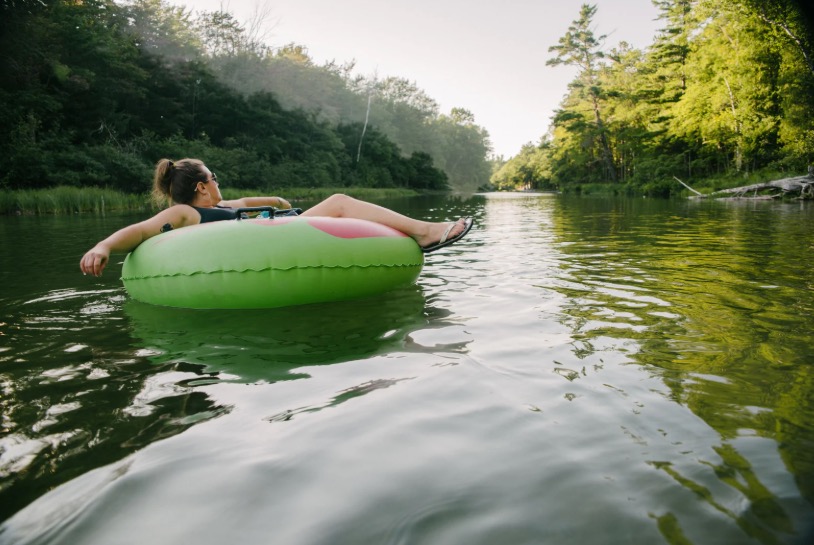
If you have spent a summer in Texas, you already know about Guadalupe River tubing. If you haven't, here is the short version: the Guadalupe runs cold and clear through some of the most scenic Hill Country terrain in the state, lined with giant bald cypress trees and limestone cliffs, and in the summer months it fills up with tens of thousands of people doing exactly one thing. They are sitting in inflatable tubes with a cold drink, letting the current do all the work.
The Guadalupe attracts over a million visitors each year to the stretch near New Braunfels alone. It is the premier Texas tubing experience, offering a range of float times, scenery, and difficulty levels that you won't find on shorter, gentler rivers. Whether you are planning a solo float, a group trip for a bachelorette weekend, or a full Hill Country summer getaway, this guide covers everything you need to know before you go.
Why the Guadalupe River Is in a Class of Its Own
The Guadalupe rises in Kerr County and runs roughly 230 miles to the Gulf Coast, but the section that draws tubers is the Lower Guadalupe, a 17-mile stretch from the Canyon Lake Dam south through Gruene and into New Braunfels. This stretch is fed from the bottom of Canyon Lake reservoir, which keeps the water temperature around 65 to 68 degrees year-round. On a July afternoon when the air temperature is pushing 100 degrees, that is a significant selling point.
Unlike the spring-fed Comal River, which runs a short and gentle loop through downtown New Braunfels, or the San Marcos River, which is more suited to casual wading, the Guadalupe offers genuine variety. You get mild rapids, deep swimming holes, limestone cliffs, rope swings, and stretches of calm flatwater broken up by enough current to keep things interesting. It is one of the best Texas Hill Country summer vacations you can plan on a single tank of gas from San Antonio or Austin.
The river's flow is controlled entirely by water releases from Canyon Lake Dam, measured in cubic feet per second (CFS). Unlike rain-fed rivers that fluctuate unpredictably, the Guadalupe's flow is managed, which means you can check a gauge before you leave home and know roughly what to expect on the water. That said, heavy rainfall upstream of the dam can trigger emergency releases, so always verify conditions on the day of your trip.
Understanding River Flow Levels Before You Go
The most important number you need to know before floating the Guadalupe is the current CFS release rate from Canyon Dam. Every outfitter on the river watches this number daily, and it determines how long your float will take, how many shallow sections you will have to walk through, and whether conditions are safe at all.
Here is how to read the conditions:
- Below 150 CFS: Very low flow. Expect to climb out of your tube and walk short distances across shallow rock shelves. The river is still fun but more work than usual. Check with your outfitter before committing to a longer float.
- 150 to 250 CFS: Low but floatable. Some shallow sections, but a good day on the river for most people. Ideal if you want a longer, slower, more peaceful experience.
- 250 to 350 CFS: The sweet spot. Enough current to keep you moving without dragging on rocks, but not so fast that beginners feel out of control. The vast majority of summer days fall somewhere in this range.
- 350 to 550 CFS: Above average flow. Float times shorten and rapids get more lively. Experienced tubers and adults will find this exciting; families with young children should be more cautious and consult their outfitter.
- Above 550 CFS: High water. Outfitters may close certain sections or the entire river. Tubing is not recommended above 1,000 CFS. If the Army Corps of Engineers has opened the flood gates at Canyon Dam, stay off the water.
The U.S. Geological Survey maintains a real-time flow gauge at the Sattler monitoring station. Most outfitters also post current CFS readings on their websites and social media pages. Call ahead on weekends during or after heavy rain anywhere in the Canyon Lake watershed.
Choosing Your Float: The Main River Sections
The Lower Guadalupe between Canyon Lake Dam and New Braunfels offers three distinct float experiences. Choosing the right one depends on how much time you have, who you're with, and how much adventure you want. For a broader look at what to do once you are off the water, our guide to things to do in New Braunfels has the full rundown.
The Horseshoe Loop (Canyon Lake Area)
The most popular single section on the river. The Horseshoe Loop sits close to Canyon Lake Dam, where the water is coldest and the limestone cliffs are most dramatic. The loop is roughly one to 1.5 miles and takes one to two hours depending on flow. Because the put-in and take-out are close together, many people float it twice in a single day. This is the go-to section for visitors staying near Canyon Lake who want the most scenic stretch of the Guadalupe without a long float commitment. Several outfitters, including Tube Haus, River Sports Tubes, and Whitewater Sports, operate here.
The Middle Stretch (Sattler to Gruene)
The most popular overall section and the one most outfitters in the area run. The float begins near Sattler and ends in or near Gruene, covering roughly five to eight miles of river depending on the specific put-in point. Float times range from two to five hours. This section passes through the heart of the Hill Country scenery, with giant cypress trees shading the banks, occasional rope swings, and a mix of mild rapids and calm stretches. It ends near Gruene, putting you steps away from Gruene Hall and the historic downtown district.
The Lower Section (Gruene to New Braunfels)
The most accessible section for visitors staying in New Braunfels proper, and the most regulated. This stretch falls inside the New Braunfels city limits, which means the container ordinance applies: no glass, no aluminum cans, no disposable containers on the river. Drinks must be in reusable containers. This section is calmer and more family-oriented than the upper stretches, with multiple outfitter access points and easy connections to the city's restaurants and attractions. For family-friendly activities in Texas, this section is the safest and most convenient entry point.
Working with a River Outfitter
Unless you are a local with your own tubes and a plan for getting your car back, going with a river outfitter is the right call. They handle the logistics that make a tubing trip genuinely annoying to self-organize: tubes, cooler floats, life jackets, shuttle buses upstream, and a take-out point at the end. Most charge $20 to $35 per person for a full package that includes the tube rental, cooler tube, shuttle, and access to facilities.
A few things to know before you book:
- Reservations: On summer weekends, especially Memorial Day through Labor Day, outfitters fill up fast. Book online in advance and complete any liability waivers on the outfitter's website to save time when you arrive.
- What is included: Most outfitters include the shuttle bus ride upstream and a cooler float with the base package. Life jackets are available free of charge. Confirm what is included before you show up expecting extras.
- No equipment rentals at the river: The park does not rent tubes or any river gear. Everything must either come from an outfitter or be brought from home.
- Pets: There are no city ordinances prohibiting dogs on the Guadalupe inside New Braunfels city limits, but individual outfitters set their own rules about animals on shuttles and equipment. Call ahead if bringing a dog.
- Age minimums: Most outfitters require children to be at least 5 or 6 years old to float. Life jackets are mandatory for all children under 8 when flow exceeds 500 CFS, and for everyone when flow exceeds 750 CFS.
River Rules You Actually Need to Know
The Guadalupe has a reputation as a party river, and that reputation has also produced a fair amount of regulation over the years. Knowing the rules before you arrive will keep your day smooth and fine-free.
- The Container Ordinance (inside New Braunfels city limits): No glass, aluminum cans, Styrofoam, or other disposable food and beverage containers on the river or in city-owned parks. Drinks must be in reusable containers such as tumblers, canteens, or insulated jugs. This ordinance applies from the city boundary at the Gruene Bridge into New Braunfels. Outfitters operating above the city limits are not subject to this rule.
- No jumping from bridges, dams, or trees: Enforced by law enforcement, which patrols the river during peak season.
- Littering: A $500 fine per violation. Most outfitters provide mesh trash bags. Use them. The river's health depends on it.
- No lifeguards: There are no lifeguards anywhere on the Guadalupe River. Swim at your own risk, and never let children float unaccompanied.
- Alcohol: Legal for adults 21 and older anywhere on the river outside city limits. Inside city limits, alcohol must be in a non-disposable container. The river is not a place for intoxication; currents and rocky sections require attention even on calm days.
- Private property: The banks of the Guadalupe along River Road are privately owned. Stay on the water and use designated access points. Do not pull out on private land.
What to Pack for a Day on the Guadalupe
Packing for the Guadalupe takes some thought. You are going to be wet, in direct Texas sun, for two to five hours. Here is what experienced floaters bring:
- Water shoes or sandals with a back strap: Flip-flops float away and are useless on rocky entry points. Water shoes are ideal. If you wear sandals, make sure they have a heel strap.
- Sunscreen, applied before you get in: Reapplication on the river is difficult. Apply SPF 50 or higher at least 30 minutes before launch and wear a hat or long-sleeved sun shirt.
- Waterproof phone case or dry bag: A $10 investment that will save your phone. The Guadalupe has rapids. Things tip over.
- Reusable containers for drinks: Required inside city limits, and good practice everywhere. Insulated tumblers keep beverages cold far better than cans that have been baking in the sun inside a tube cooler.
- More water than you think you need: You are in the sun for hours. Bring a dedicated water bottle in addition to whatever else you are drinking.
- A snack: Float times can run longer than expected at low CFS. A granola bar or some trail mix at the bottom of the cooler has saved many a low-blood-sugar afternoon.
- A mesh trash bag: Provided by most outfitters, but worth bringing your own as backup. Everything you bring in comes back out with you.
- Rope or bungee cord: For keeping your group's tubes and cooler tied together. Losing the cooler tube to the current is a classic first-timer mistake.
Leave your valuables at home or locked in your car. Wallets, jewelry, and anything you cannot afford to lose have no business on a river.
Best Time to Float the Guadalupe
The official tubing season runs from roughly March through October, with peak season from Memorial Day to Labor Day. Summer weekends are the most crowded, the most festive, and the hottest. Arrive early on busy days, with most outfitters opening around 9 a.m. By 11 a.m. on a Saturday in July, parking lots are full and wait times for shuttles can stretch to 45 minutes.
Weekdays during the summer offer the same weather and water conditions with a fraction of the crowd. If you have flexibility in your schedule, a Tuesday or Wednesday float in June is one of the better days you can have on a Texas river. The early weeks of May and the entire month of September hit a sweet spot: CFS rates are often good, temperatures are bearable for hikers who want to combine the float with other activities, and the Hill Country wildflower season extends into late spring. For couples planning a more relaxed Hill Country trip, the fall float pairs well with wine tasting and the broader appeal of the region's slower season.
Winter brings a different experience altogether. TPWD stocks the Guadalupe below the dam with rainbow trout from November through March, making this stretch one of the southernmost trout fisheries in the United States. Tubing slows down considerably, but the river stays beautiful and largely empty. For those interested in the full picture of year-round Hill Country water activities, our guide to year-round fishing covers the Upper and Lower Guadalupe in more detail.
After the Float: What to Do in New Braunfels and Beyond
The end of your float puts you in one of the better positions you can be in after a long day outdoors: wet, sunbaked, and close to good food and cold beer. Gruene, the historic neighborhood where the middle stretch of the river deposits most floaters, has the oldest continuously operating dance hall in Texas (Gruene Hall), a general store, antique shops, and easy access to several well-regarded restaurants. From there, downtown New Braunfels is a short drive with a full range of dining options. Our guide to restaurants in New Braunfels is the best place to start planning dinner.
For groups celebrating a bachelorette party or special occasion, the Guadalupe is a natural anchor for a full weekend itinerary. Combine a river float with Gruene Hall, the New Braunfels nightlife scene, and a stay near the water for a trip that holds up as one of the best Texas bachelorette party ideas in the state.
Canyon Lake, about 12 miles upstream from the New Braunfels outfitters, is worth a full day of its own for boating, hiking, and lake swimming. And for those interested in fishing in the Hill Country, the tailwater section below Canyon Lake Dam is a world-class trout fishery in winter that very few Texas visitors know exists.
Frequently Asked Questions About Guadalupe River Tubing
How long does it take to float the Guadalupe River?
Float time depends on the CFS release rate from Canyon Dam and the section you choose. The Horseshoe Loop near Canyon Lake typically takes one to two hours. The middle stretch from Sattler to Gruene runs two to five hours. Full-day floats combining multiple sections can stretch to six hours. At very low CFS levels, all float times extend because the current slows significantly.
Do I need to make a reservation?
On summer weekends, yes. Most outfitters on the Guadalupe fill up on peak days, particularly from Memorial Day through Labor Day. Booking online in advance and completing your liability waiver ahead of time will save you significant wait time when you arrive. Weekday visits rarely require advance reservations, though it's always worth confirming with your chosen outfitter.
Can I bring my own tube?
Yes. Most outfitters allow guests with their own equipment to pay a reduced shuttle-only fee. Confirm the pricing before you arrive. If you bring your own tube, make sure it has a bottom mesh or seat so you don't drag on shallow sections, and avoid black tubes, which absorb heat and become uncomfortable quickly in direct Texas sun.
What is the container ordinance and does it apply to my float?
The New Braunfels container ordinance prohibits all disposable food and beverage containers, including aluminum cans, glass, Styrofoam, and plastic cups, on the river and in city parks within the New Braunfels city limits. The city boundary is at the Gruene Bridge. Outfitters operating above the Gruene Bridge, in the Canyon Lake area, are outside city limits and not subject to the ordinance. If your float starts or ends within city limits, use reusable containers for everything.
Is the Guadalupe River safe for kids?
The lower, in-city section near New Braunfels is the calmest and most family-friendly stretch. Children should be at least six years old and comfortable in water before floating. Life jackets are mandatory for children under 8 when flow exceeds 500 CFS, and available at all outfitters. Keep children tethered to your tube on moving sections. At 750 CFS or higher, life jackets are required for all participants.
Can I float if I haven't checked the CFS level?
You can float, but you should not. CFS level determines float time, difficulty, and safety. A trip planned for two hours can turn into five at 150 CFS, or feel genuinely dangerous at 700 CFS. Check the USGS real-time gauge at the Sattler monitoring station or call your outfitter before you leave. It takes two minutes and can save a ruined day or worse.
About Stay Texas Hospitality Group
Stay Texas Hospitality Group offers a thoughtfully curated collection of vacation rentals across the Texas Hill Country and beyond, including properties near the Guadalupe River in New Braunfels, Canyon Lake, Spring Branch, and Wimberley. From riverside homes to hill-view retreats, every Stay Texas property is chosen for its character and proximity to the Hill Country's best experiences. Whether you are planning a summer float trip, a wine country weekend, or a full-week family getaway, Stay Texas puts you in the right place.
Find Your Hill Country Home Base with Stay Texas
The best way to float the Guadalupe is from a comfortable home base nearby. Browse our New Braunfels vacation rentals, Canyon Lake vacation rentals, and waterfront rentals to find a property that puts you steps from the river and everything the Hill Country has to offer. Call us at (830) 999-2694 or browse the full Stay Texas collection to book your stay today.